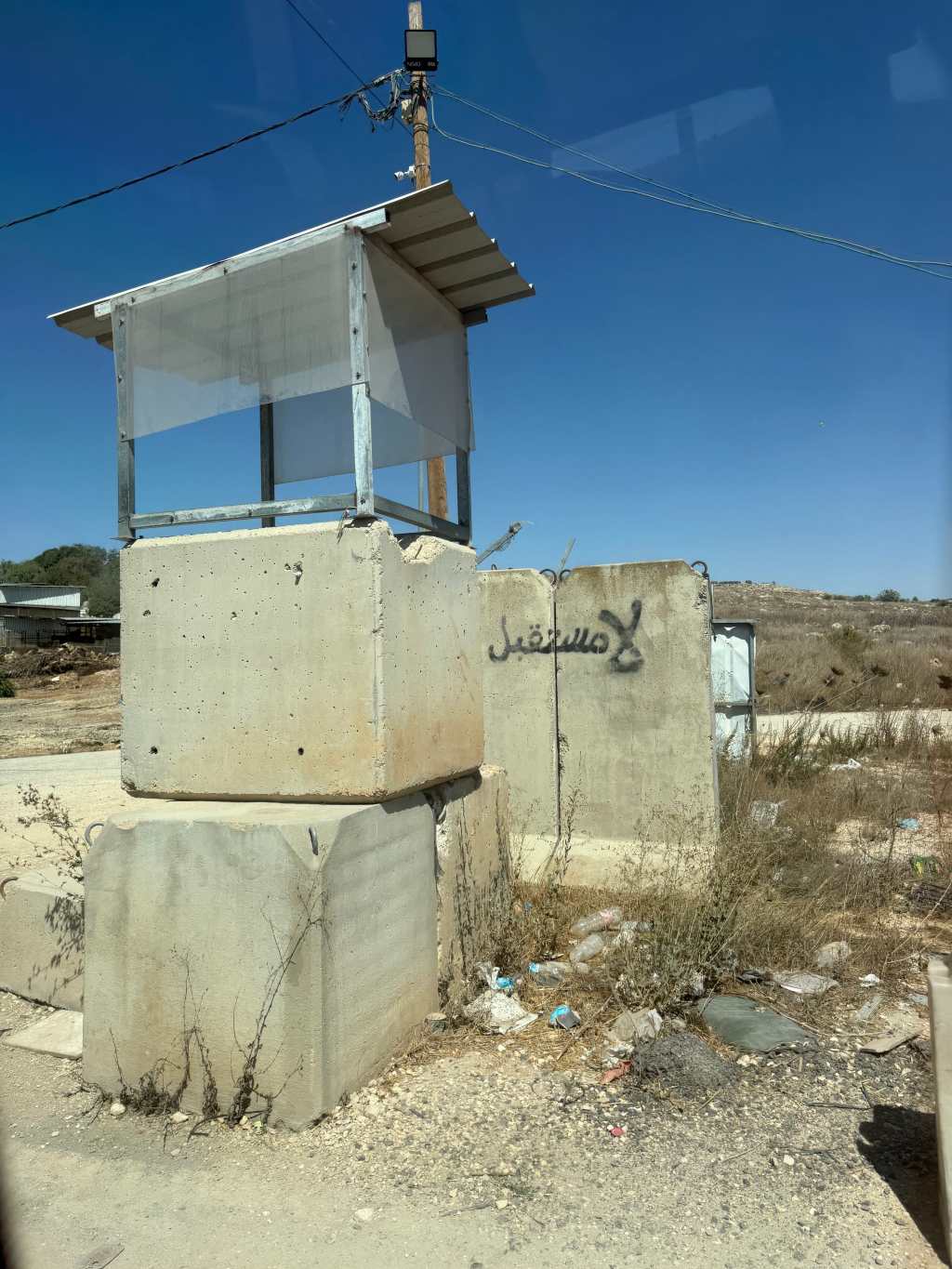
When the words “There is no future in Palestine” are written on roads, walls, and barriers, they are more than words. For Christians who live in this land, they touch a deeper question: Can one person convince another person that their land is no longer a place where a future is possible?
The Christian faith begins with an answer that is the opposite of this message: the future does not belong to those who hold power; the future belongs to God.
The Future Belongs to God
The Bible does not build hope on the promise of an easy life. Abraham lived as a stranger. The people of God walked through the wilderness. The prophets spoke in times of suffering and uncertainty. And Christ Himself entered Jerusalem in a time of occupation and violence. Yet none of these circumstances meant that the land had no future.
The resurrection is Christianity’s greatest declaration that death, violence, and injustice do not have the final word.
The Testimony of a Life
Therefore, when a Christian hears the words “There is no future,” the response does not have to be hatred or another slogan. It can be the testimony of a life:
We are here. We pray here. We plant here. We serve here. We raise our children here. We open our churches here. And we continue trying to build peace here.
Christian presence in the Holy Land is not simply about remaining in a particular geographical place. It is also a witness that God does not abandon humanity when circumstances become difficult.
The Land and Human Dignity
In Scripture, the land is always connected with responsibility. The land is not an absolute possession that can be used to deny another person’s dignity. As the Psalm says: “The earth is the Lord’s, and everything in it” (Psalm 24:1). Faith in the land, therefore, cannot become a justification for hatred, expulsion, or the denial of another human being’s dignity.
This is where the Church has a responsibility: not to allow fear to become a theology, and not to allow despair to become destiny.
The Church does not pretend that the future will be easy. It does not deny fear, suffering, displacement, loss of land, or the difficulties of daily life. But Christian hope does not promise a road without a cross. It proclaims that the cross is not the end.
Resisting Despair as an Act of Faith
For this reason, resisting despair can itself become an act of faith.
When a child continues going to school, when a farmer continues to cultivate the land, when a family continues to pray in its church, when a neighbor helps another neighbor, and when a person chooses not to hate despite suffering, these small acts become a testimony:
There is a future, because God has not finished with this land, and God has not finished with humanity.
A Testimony of Resurrection
Christian presence in Palestine can therefore become a testimony of resurrection—not a claim of victory over another people, and not a call for revenge, but a witness that life can still be planted even in a land where fear tries to make the future seem impossible.
So, in the face of the words “There is no future in Palestine,” perhaps the deepest Christian response is:
“Our future is not in the hands of those who write on the roads. Our future is in the hands of God. Therefore, we will remain witnesses of hope. We will build bridges, not walls. We will choose life over death, love over hatred, and hope over fear.”
A Christian does not remain because there is no fear.
A Christian remains because we believe that hope is stronger than fear.

